




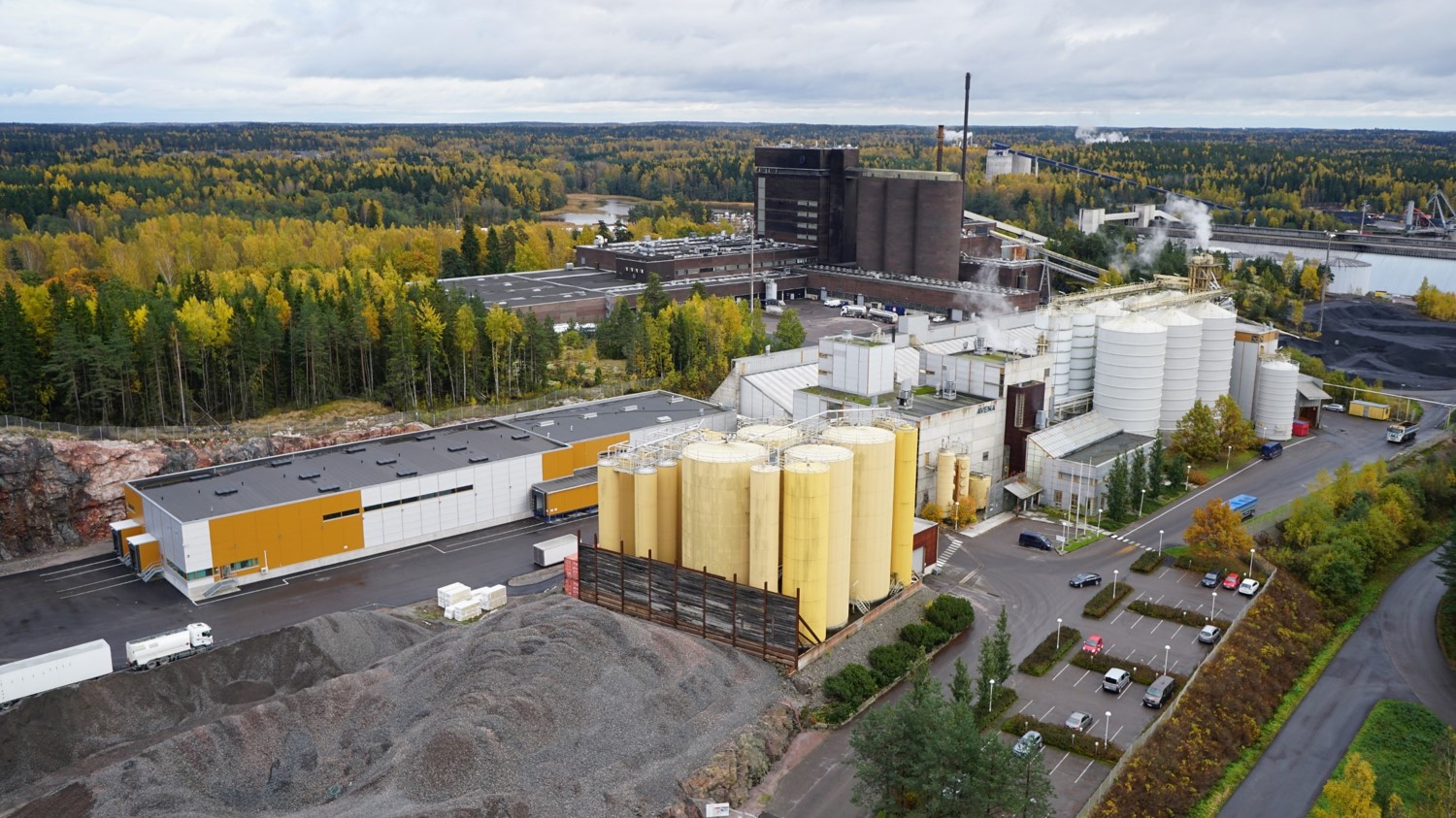
Apetit reduces its environmental impacts by investment in a bioenergy plant
One of the objectives of Apetit’s corporate responsibility programme is to reduce the Group’s carbon dioxide emissions* per production tonne by half by the end of 2022, using the current level as the baseline. This target will be achieved with the help of the bioenergy plant to be built at the Kantvik vegetable oil milling plant.
Oil milling is the Group’s most energy-intensive process. The bioenergy plant will replace the current energy solution based on non-renewable fuels, which means it will have a significant impact on CO2 emissions. The bioenergy plant will also make the production facility more self-sufficient with regard to energy.
In addition to reducing CO2 emissions, the bioenergy plant creates the opportunity to make more efficient use of production side streams in energy production. The bioenergy plant can be used to burn byproducts such as the straw waste included in seed deliveries and waste from screening processes. In the future, the steam energy required by the plant will be produced by the bioenergy plant. The plant is scheduled to be completed in the end of 2020. The size of the investment is EUR 5.2 million.
*The calculation of Apetit’s climate impacts is based on the energy consumption of the company’s production plants and the way the energy is generated.