




Apetit determined the carbon footprint of rapeseed oil
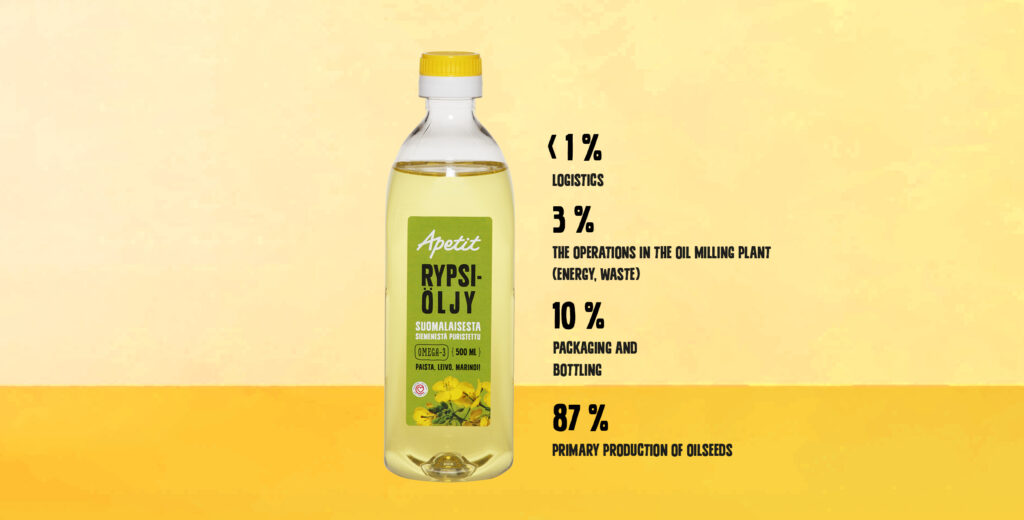
Apetit carried out a carbon footprint study for domestic rapeseed oil. The carbon footprint of the Apetit rapeseed oil sold in PET plastic bottles through retail channels is 2.7 kg CO2 equivalent per kg. Up to 87 per cent of climate impacts are generated by primary production. The relatively high share of primary production in the carbon footprint of rapeseed oil is partly explained by the natural harvest level of oilseed plants.
The share of the Kantvik vegetable oil milling plant, i.e. oil processing, in the product’s climate impacts was very small (3 per cent). This is due in particular to the high share of renewable energy resources used at the milling plant and the plant’s energy efficiency. Packaging and bottling account for 10 per cent of the product’s climate impacts. The carbon footprint was also calculated for the Neito rapeseed oil in glass bottles: the carbon footprint of this product was approximately 7 per cent higher.
According to the study results, the most significant climate impacts of rapeseed oil during its life cycle come from primary production. Avena, responsible for Apetit Group’s Oilseed Products business, takes part in the RypsiRapsi2025 project, which aims at finding and spreading the best cultivation practices and developing harvest levels.
The carbon footprint of domestic rapeseed oil was calculated, as far as possible, using the figures of Apetit’s own value chain, i.e. primary data. Five-year cultivation data were used in the calculation of the climate impacts of domestic rapeseed cultivation. Apetit commissioned the study from the Natural Resources Institute Finland.
How the climate impacts of Apetit rapeseed oil arise: